-

B&S Watchmaker approved
Watchmaker approved
B&S Watchmaker approved
Every watch we buy is checked by our watchmakers for full functionality and originality of parts. Every watch that we sell is tested again before dispatch to ensure that it is in good working order.
-

12 months B&S warranty
12 months B&S warranty
12 months B&S warranty
Every watch purchased from us comes with a 12 month warranty regarding full functionality (from the date of purchase).
-

Authenticity guaranteed
Certified Pre Owned - verified original watch
Authenticity guaranteed
Every watch, whether vintage, used or unworn, is checked and verified for originality by us and our watchmakers.
New Entries
Blancpain
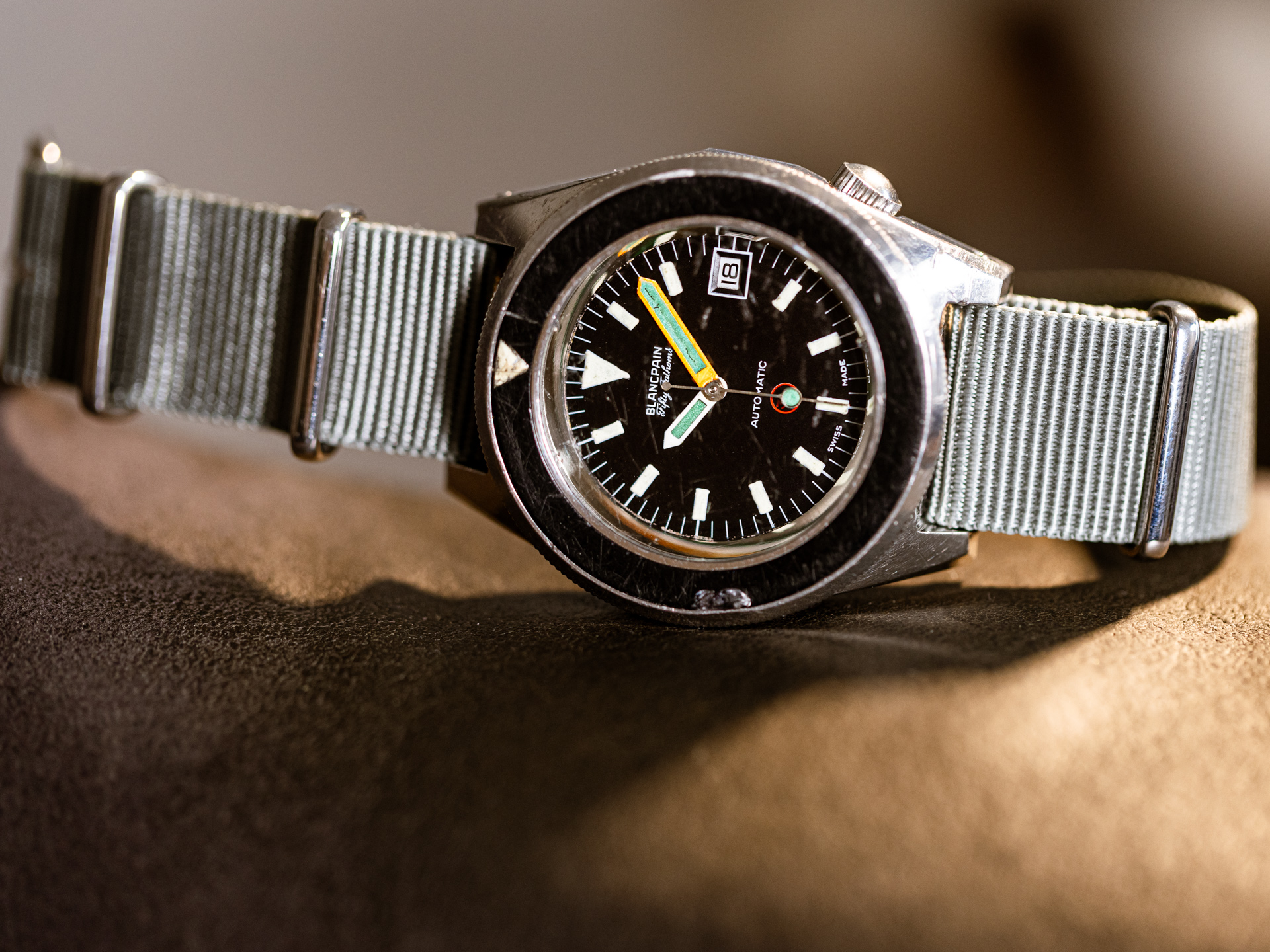
Vintage FIFTY FATHOMS BUND KAMPFTAUCHER
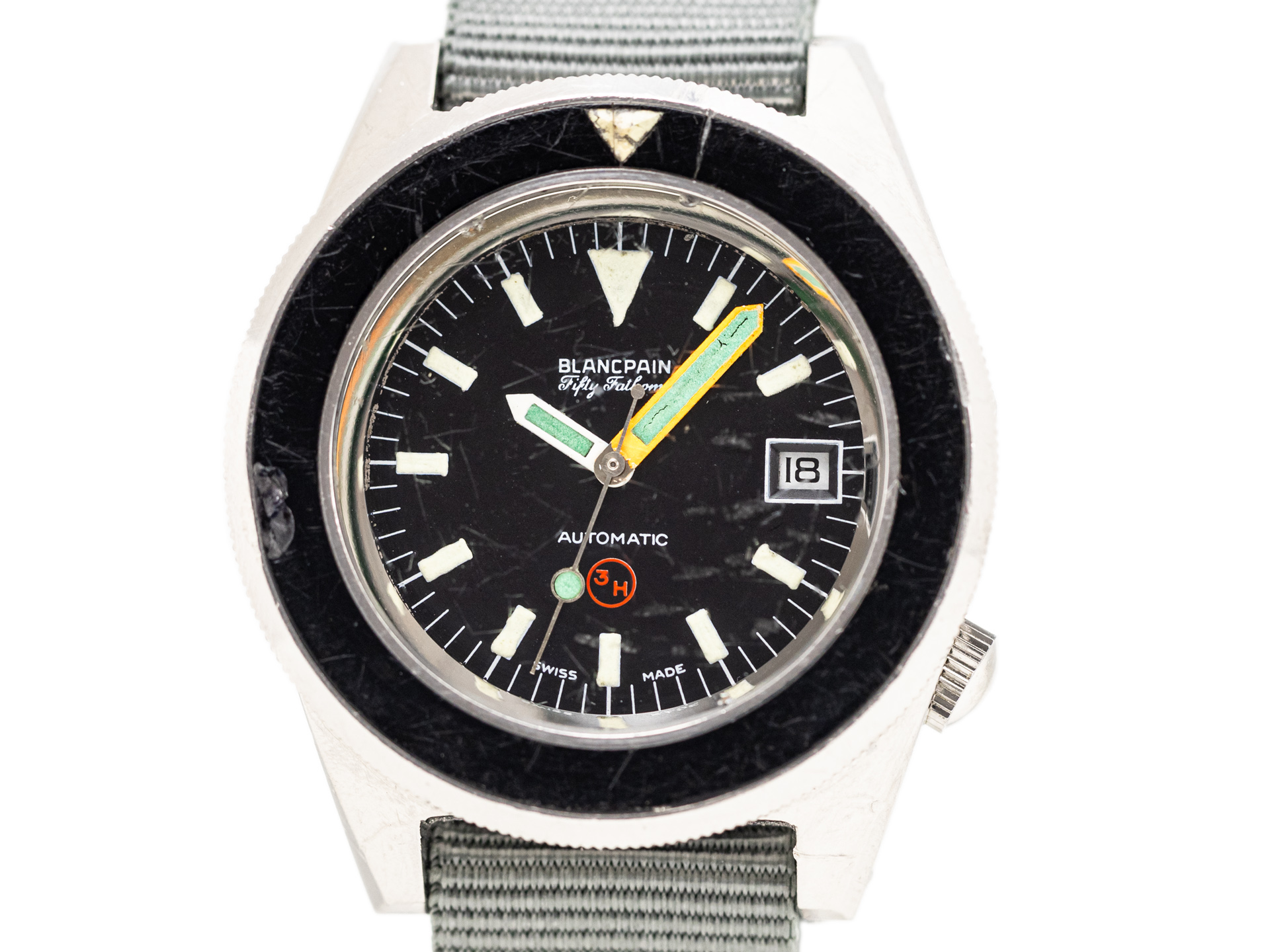
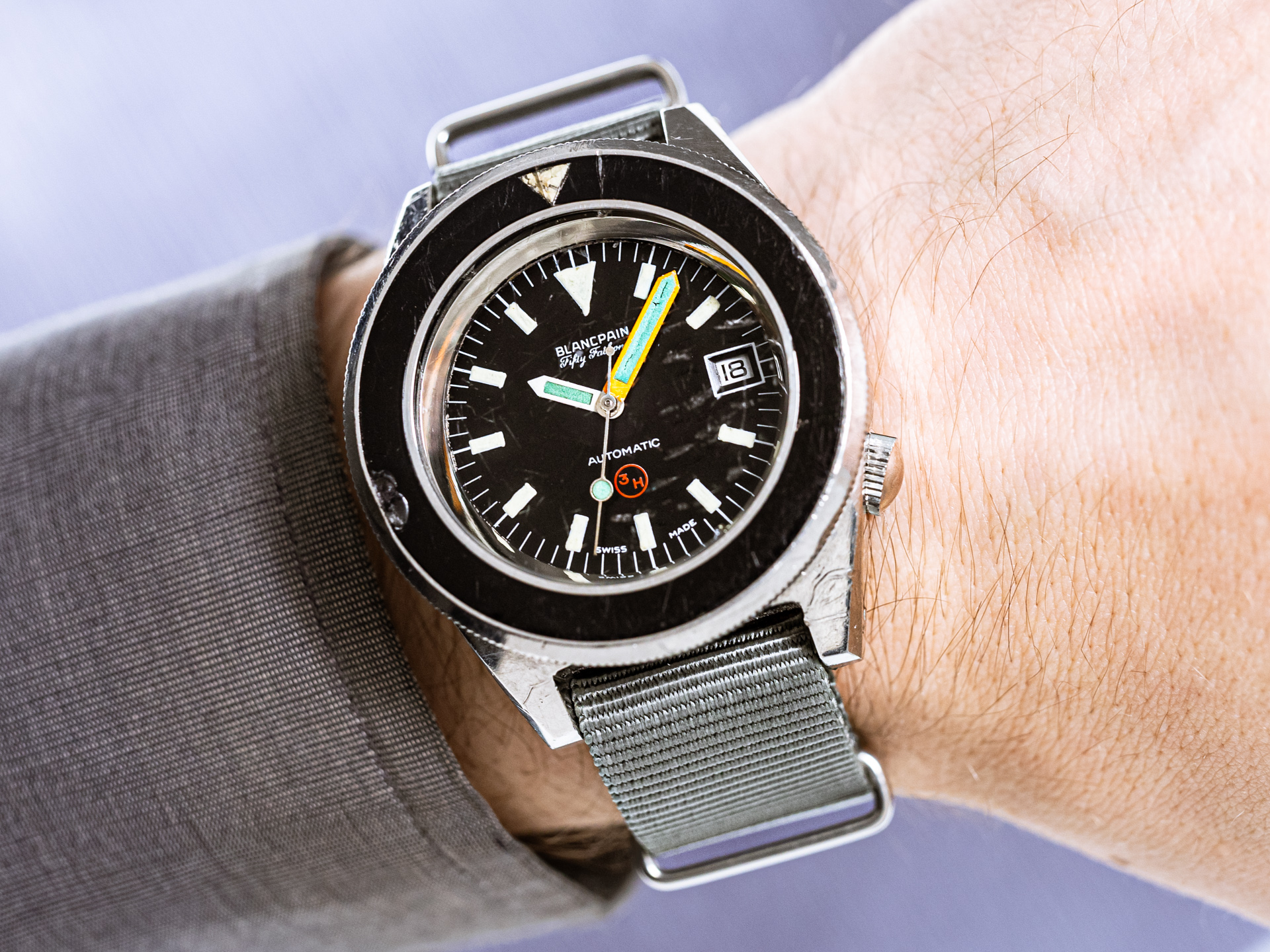
BLANCPAIN Vintage FIFTY FATHOMS BUND KAMPFTAUCHER 3H Steel Trititum Bj-1980
€ 14,590.-
plus shipping costs
| Germany | € 100.- |
| EU 1 Austria, Belgium, Czechia, Denmark, France, Italy, Luxembourg, Monaco, Netherlands, Poland, Spain | € 150.- |
| EU 2 Bulgaria, Croatia, Cyprus, Estonia, Finland, Greece, Hungary, Ireland, Latvia, Lithuania, Malta, Portugal, Romania, Slovakia, Slovenia, Sweden | € 200.- |
| Switzerland | € 350.- |
| World | € 550.- |

Data
| Reference | BUND |
| Code | KW1576 |
| Condition | Very good |
| Year of production | 1980 |
| Property of | watchandco GmbH |
Description
| Case material | Steel |
| Case diameter | 41 |
| Glas | Sapphire glass |
| Dial | Black |
| Dial numbers | Index |
| Bracelet material | Textile |
| Caliber | ETA RAYVILLE 2873 |
| Movement | Automatic |
| Waterproof | 300 m |
Features
Date
Miscellaneous
Vintage, Luminescent Hands, Screw-Down Crown, Center Seconds, Quick Set, Only Original Parts, Rotating Bezel, Luminous indexes
Our remarks
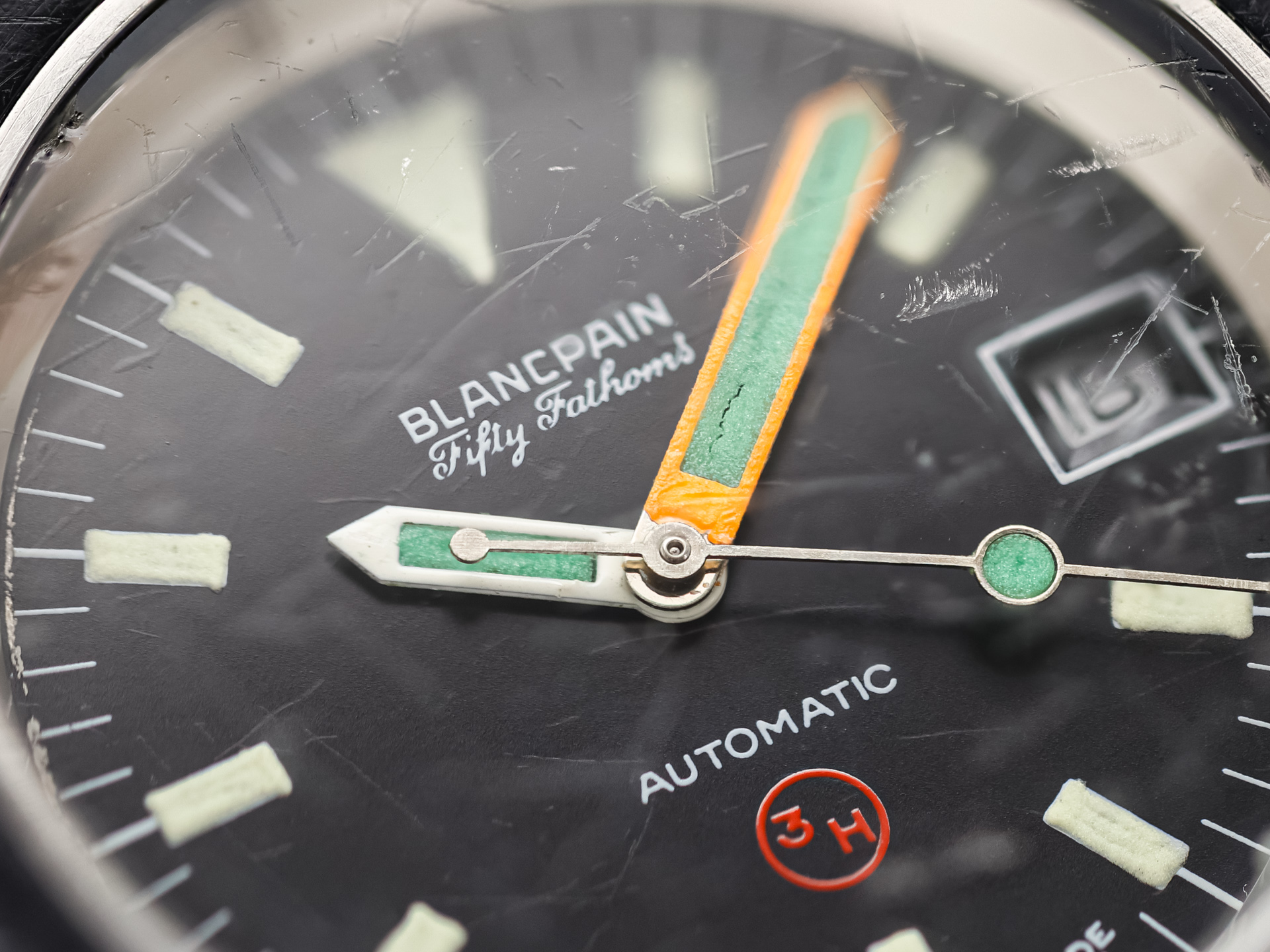
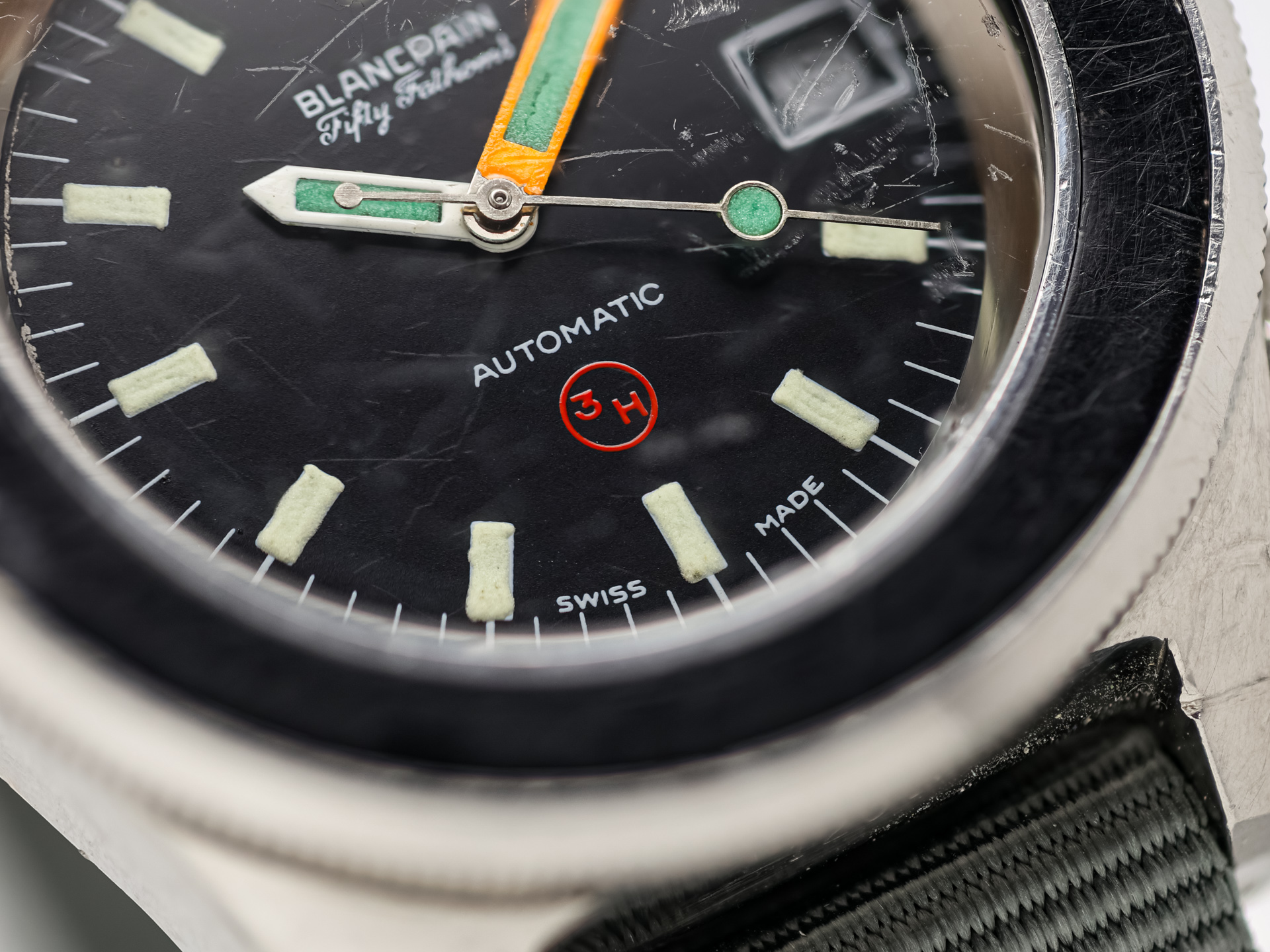
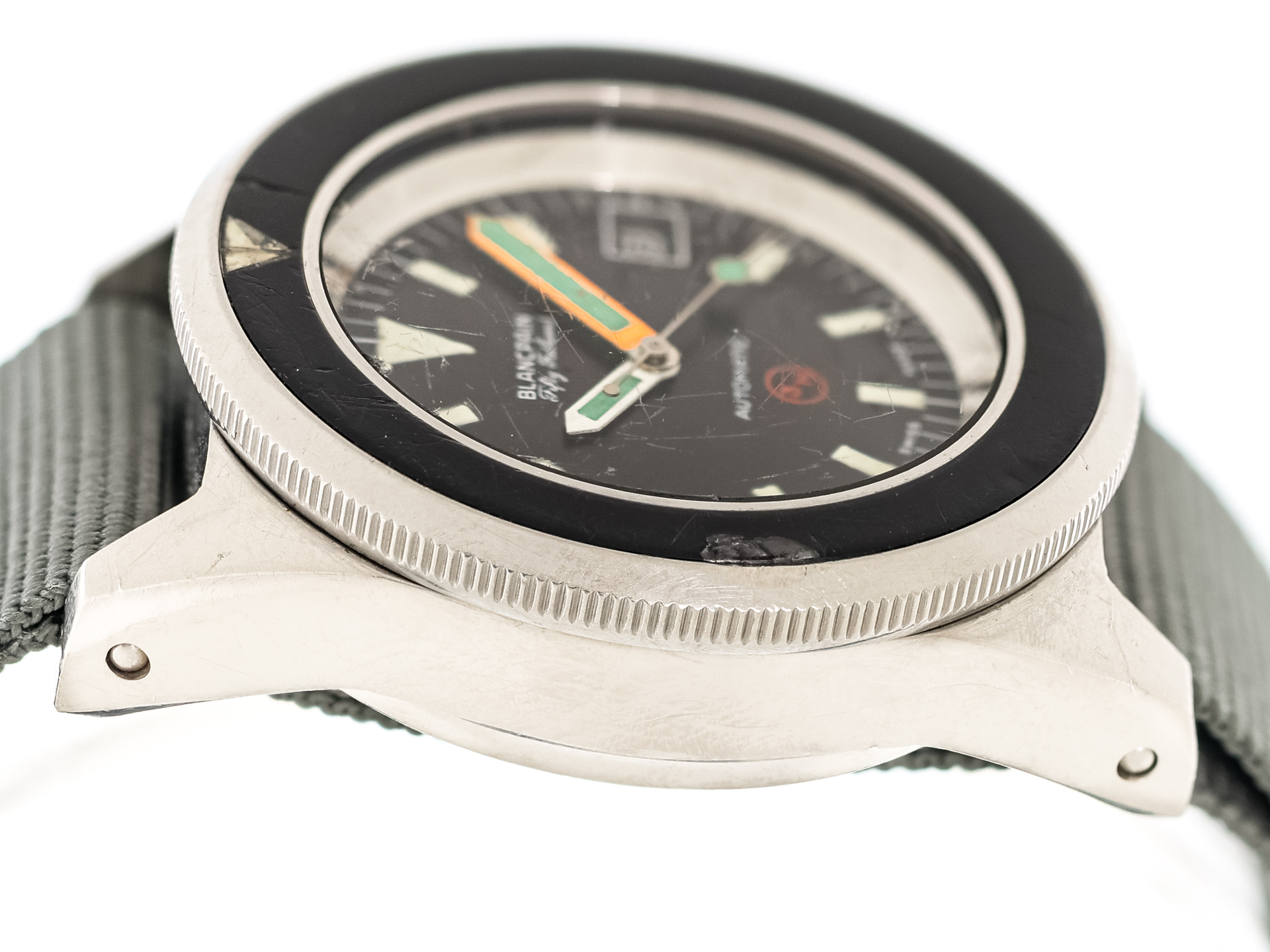
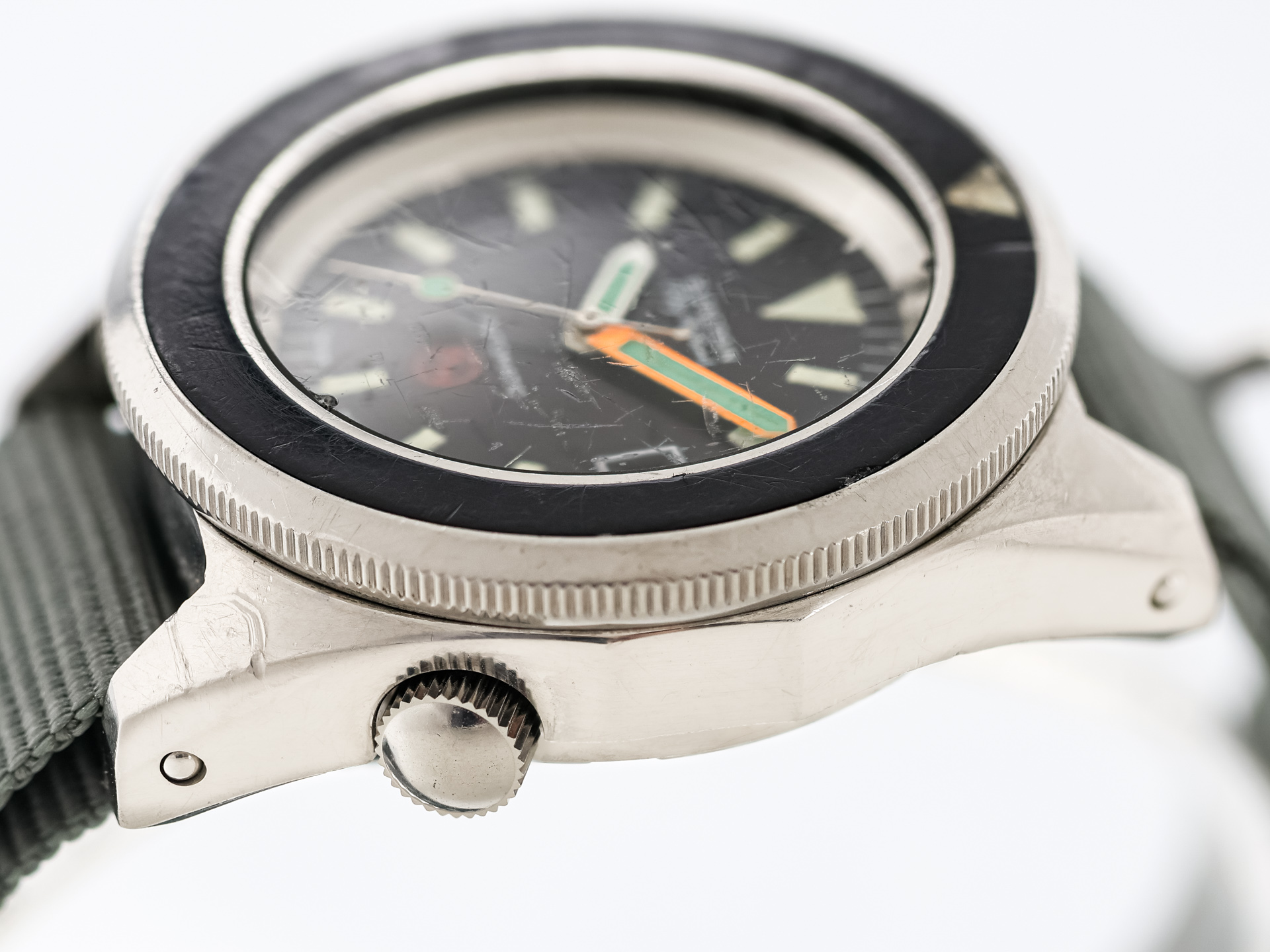
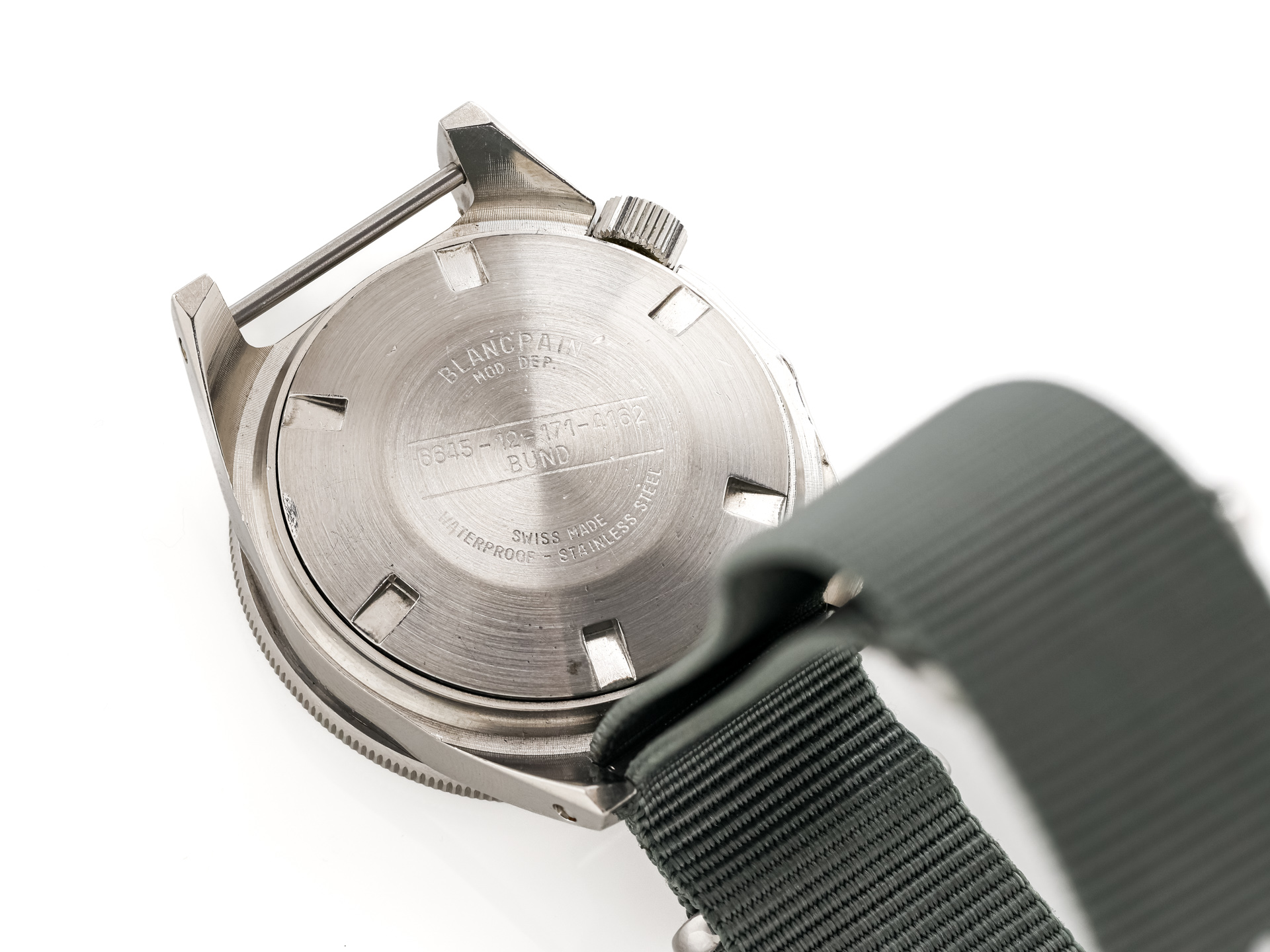
BLANCPAIN Fifty Fathoms Bund, Kampftaucher, Steel, Tritium 3H Black Dial, Year 1980
This is one of the pieces that made the Fifty Fathoms a legend among military divers. It was built for the German Bundeswehr, marked simply "BUND" instead of a commercial reference number, because these watches were never sold, only issued to combat divers who actually needed them underwater.
The case is steel and built for one purpose, to survive real dive missions. There is no graduated bezel scale here, since Bund divers worked with rebreathers and never needed to time a dive the way a Rolex Submariner wearer would. That plain bezel with its single luminous marker is one of the details that gives this watch away as a genuine military piece rather than a civilian Fifty Fathoms.
The dial is black and carries the 3H marking, which tells you it uses tritium for the luminous material. That small detail is a direct link to the technology of its time and one of the first things collectors check when judging whether a piece like this is original.
Blancpain developed the Fifty Fathoms back in the early 1950s together with French combat divers, and the model quickly became the watch every serious military diving unit wanted. The Bundeswehr version from the late 1970s and early 1980s carries that same DNA, just adapted to German requirements and issued in far smaller numbers than the commercial models, which is exactly why so few of them surface today.
This example comes in very good conditio. It stands as an honest, original example of a genuine issued military watch, the kind that rarely comes up outside of specialist circles.
"A serious piece for collectors who care about real military history, not just the look of it."